
How to Choose A Gymnastics Program: Tumbling vs. Artistic
You've decided gymnastics is right for your kid. That's the easy part.
Now comes the real question: what kind of gymnastics?
Most parents don't realize there are fundamentally different types of programs out there — and the one you pick shapes your child's entire experience.
Here's what you need to know.
Two Paths
Artistic gymnastics is what you see on TV during the Olympics. Think Simone Biles on the balance beam.
It typically includes 4 events for women (vault, bars, beam, floor) and 6 events for men (floor, pommel horse, rings, vault, parallel bars, high bar).
It's a fantastic discipline — and it demands a lot. Athletes train across all of those events simultaneously, which means more equipment, more specialization, and often more hours in the gym.
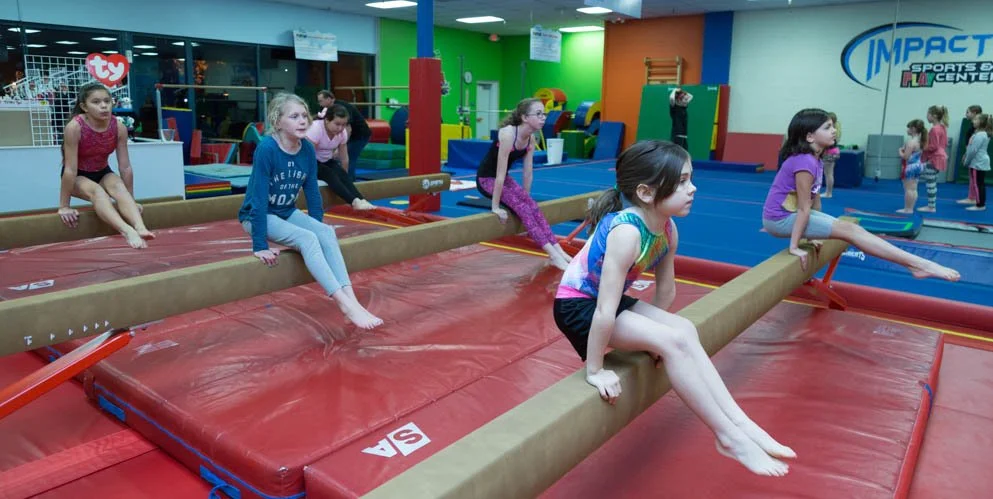
Balance Beam is one of the four events in Women’s Artistic Gymnastics.
Tumbling-based programs focus on what many coaches consider the single most important foundation in gymnastics: floor skills.
That means rolls, backbends, handsprings, aerials, and back tucks — all built through a structured, progressive curriculum.
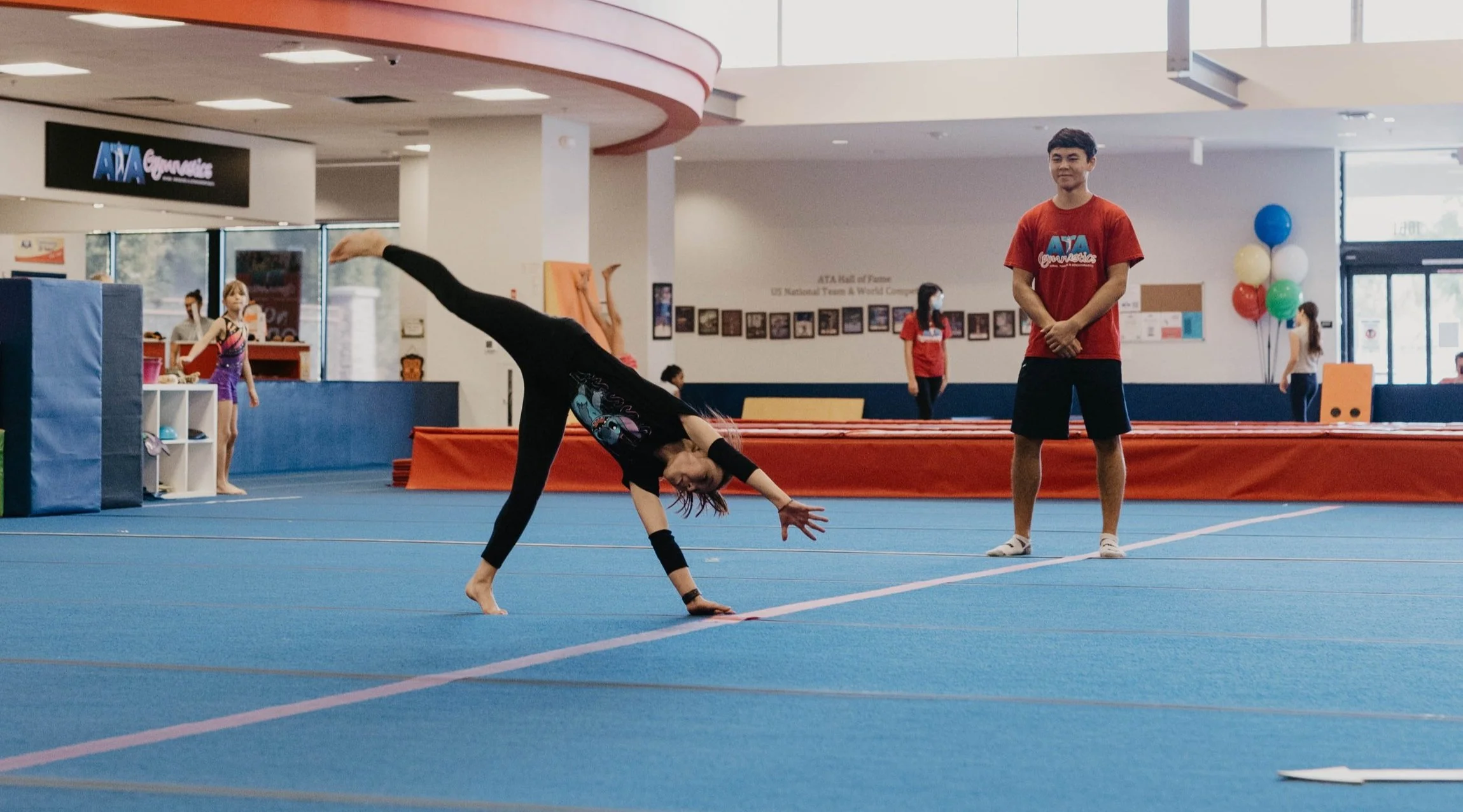
Handstands and cartwheels are two of the most important floor (a.k.a tumbling) skills.
What Makes Them Different
(For Beginners)
Here's the big one: a tumbling-focused program lets your child go deep instead of wide.
Rather than splitting time across four to six different apparatuses, your child builds skills in a logical sequence — mastering one level before moving to the next.
Why that matters:
Stronger fundamentals. Tumbling is the backbone of almost every gymnastics discipline. A rock-solid tumbling foundation transfers to cheer, dance, acro, martial arts, diving — even parkour.
More accessible progression. Kids experience regular wins as they level-up relatively quickly and progress to skills with serious “wow” factor. That builds confidence fast.
Reduced injury risk. Fewer apparatuses means coaches can closely supervise technique on the skills that matter most — and build strength progressions that protect growing bodies.
So Which One Is Right for Your Child?
Artistic gymnastics might be a great fit if your child is drawn to the full range of apparatus, has expressed interest in competing in traditional gymnastics, and your family is ready for a significant time commitment.
A tumbling-based program might be the better fit if you want a more focused progression path, your child is co-enrolled in a related sport (soccer, cheer, dance, martial arts), or your kid simply loves to flip!
Honestly? There's no wrong answer. Both paths build strength, flexibility, coordination, and confidence.
The best program is the one where your child feels safe, challenged, and excited to come back every week.
What If My Child Wants to Compete?
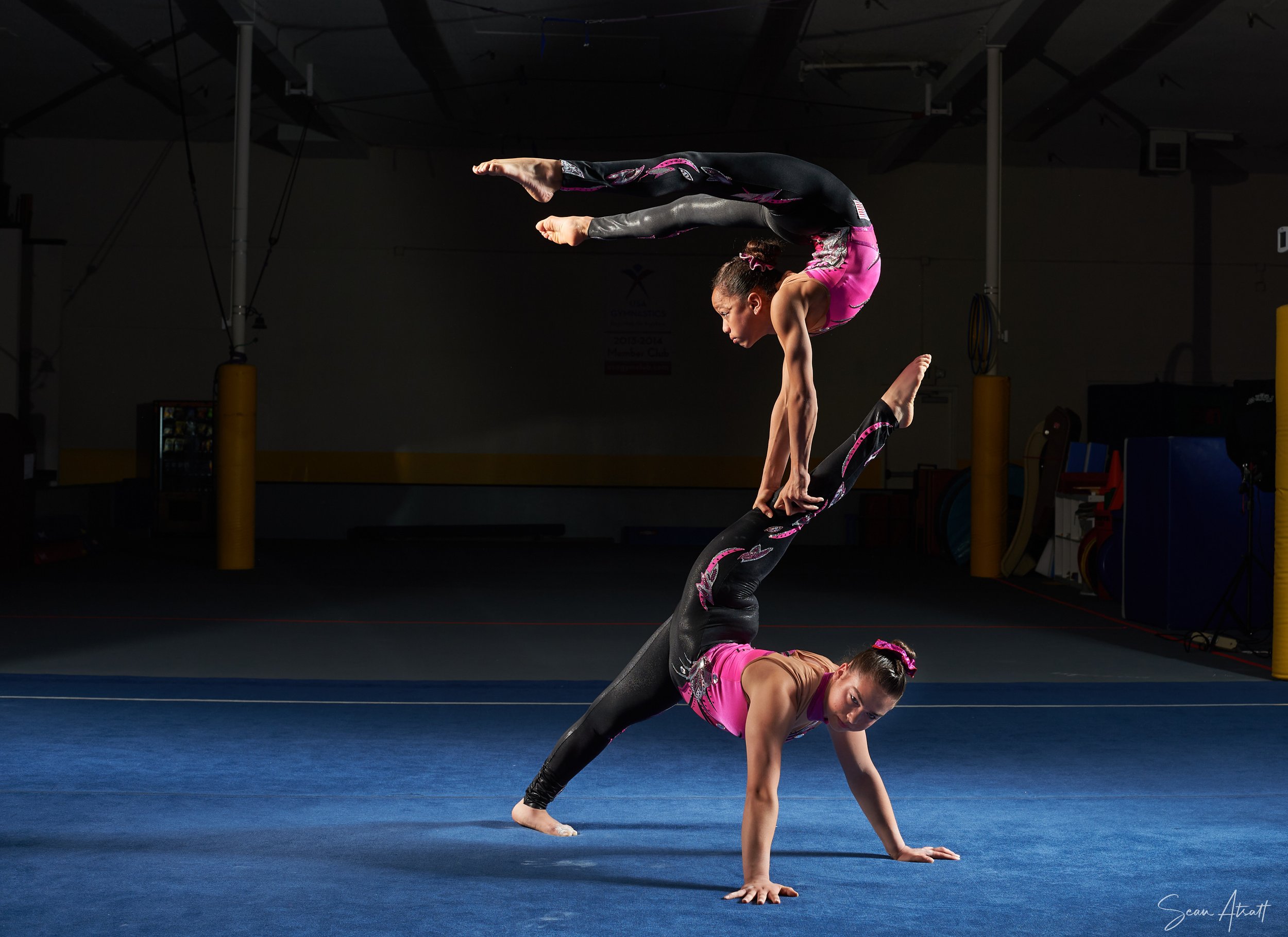
An elite-level Acrobatic Gymnastics pair show off one of their skills.
Great news: both paths lead to exciting competitive opportunities.
For artistic gymnasts, the competitive track is well-known — USAG levels, state and regional meets, and (for the dedicated few) the elite pipeline that leads to national and international competition.
For tumbling athletes, the competitive world is broader than most parents realize.
A strong tumbling foundation opens the door to:
Trampoline & Tumbling (T&T) — a dedicated competitive discipline with its own national and international circuit, including the World Championships and the Olympics.
Acrobatic Gymnastics — a dynamic, team-based sport where athletes perform breathtaking partner and group routines combining tumbling, balance, and choreography. It's growing fast and competes at the world-championship level.
Competitive Cheer and Dance — where elite-level tumbling is often the single biggest differentiator between good athletes and standout ones.
Acrobatics and Tumbling (NCAA) — an exciting new discipline for college-level competition. Coaches regularly offer scholarships to stand-out tumblers, including a few recent ATA alumni.
The takeaway? Tumbling doesn't limit your child's competitive future. It expands it.
One Thing to Look For
(No Matter What You Choose)
Ask about the curriculum structure.
A great program — artistic or tumbling — should be able to tell you exactly what skills your child is working toward and how they'll progress. If the answer is vague, that's a red flag.
You should also look at class sizes. Smaller groups mean more individual coaching, more safety oversight, and faster growth.
How We Train at ATA

At ATA Gymnastics, we specialize in tumbling and acrobatic gymnastics — and we have for over 30 years.
Our Recreational and Gymster programs use a building-block progression with a concise set of skills required to move to the next level, so every athlete (and parent) knows exactly where they are and what they're working toward next.
For athletes who catch the competitive bug, our Acrobatic Gymnastics team competes at the national and international level — coached by staff who've been there themselves, including medalists at the World Championships and Pan American Championships.
Small classes. Expert coaches. And a focus on building the physical and social-emotional skills — like resilience, focus, and self-confidence — that serve kids for life.
Curious if it's the right fit for your family?
We offer trials and free evaluations so you can see the program in action before committing to anything.
Want to see exactly how basic tumbling skills progress into amazing flips? Check out our post here.